One download, one toggle, four systems that were built to run together — and a fifth pack of everything vanilla forgot to build, which turned out to be most of the barn.
The four aren’t mods that happen to be bundled. The crop timers run on the Seasons calendar, the animals only simulate inside a Night Lite anchor, and the harvesters read the same fields Farm Options is tracking. Each one still works alone — but this is the shape they were designed in.
Missing Blocks is the exception and doesn’t pretend otherwise: nothing in the farm depends on it. It’s here because barn doors, drive-through gates and path slabs are farm furniture, and making you find a second download for them would be silly. It’s also the biggest thing in the pack by some distance — most of what you can build with, you can build with because of it.
Open any of the five below to read what it does.
Night Lite is also a separate download. It’s included here because the farm simulation runs inside its anchors and can’t work without them. If you already have the standalone, don’t enable both in the same world — take this pack and leave the other one switched off.
Missing Blocks is also a separate download. Same rule: it’s built into this pack, so don’t switch the standalone on in the same world. Take the standalone only if you want the doors, gates, fences and blocks without the farm.
Before you plant anything: the crop calendar
Read this first. Crops here don’t grow on vanilla’s random ticks — they run on Seasons’ real calendar, which means each one has a planting window, and missing it costs you the harvest, not just a delay.
| Crop | Plant in | Ready in | Still standing through | Miss the window and… |
|---|---|---|---|---|
| Wheat | Spring | 5 days | Spring, Summer | wilts to nothing, unharvested |
| Carrots | Spring | 3 days | Spring, Summer | wilts to nothing, unharvested |
| Potatoes | Spring | 3 days | Spring, Summer | wilts to nothing, unharvested |
| Beetroot | Autumn | 6 days | Autumn, Winter | wilts to nothing, unharvested |
| Grass (forage) | Any season but Winter | 3 days | — | doesn’t wilt, but won’t sprout in Winter |
Each season is 7 in-game days. A crop that’s still in the ground when its last listed season ends doesn’t just stop growing — it wilts away and the harvest is lost, so a wheat field left uncut into autumn is gone, not waiting for you. Plant everything for a season in its first day or two and you’ll clear it with room to spare; plant on the last day and you may not.
The Plow and Seeder both refuse to work outside these rules rather than waste your seed — see Tackle, below.
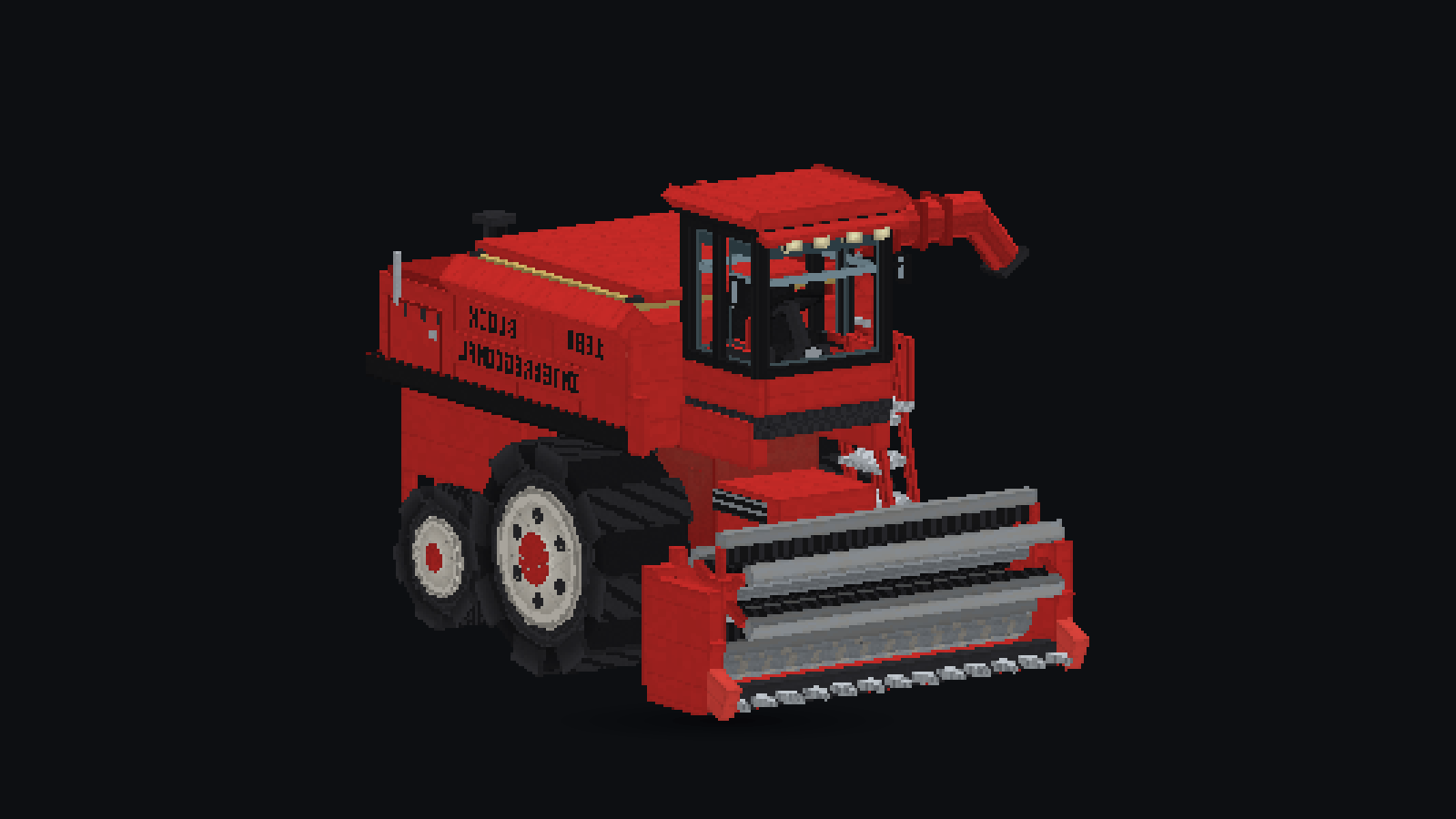
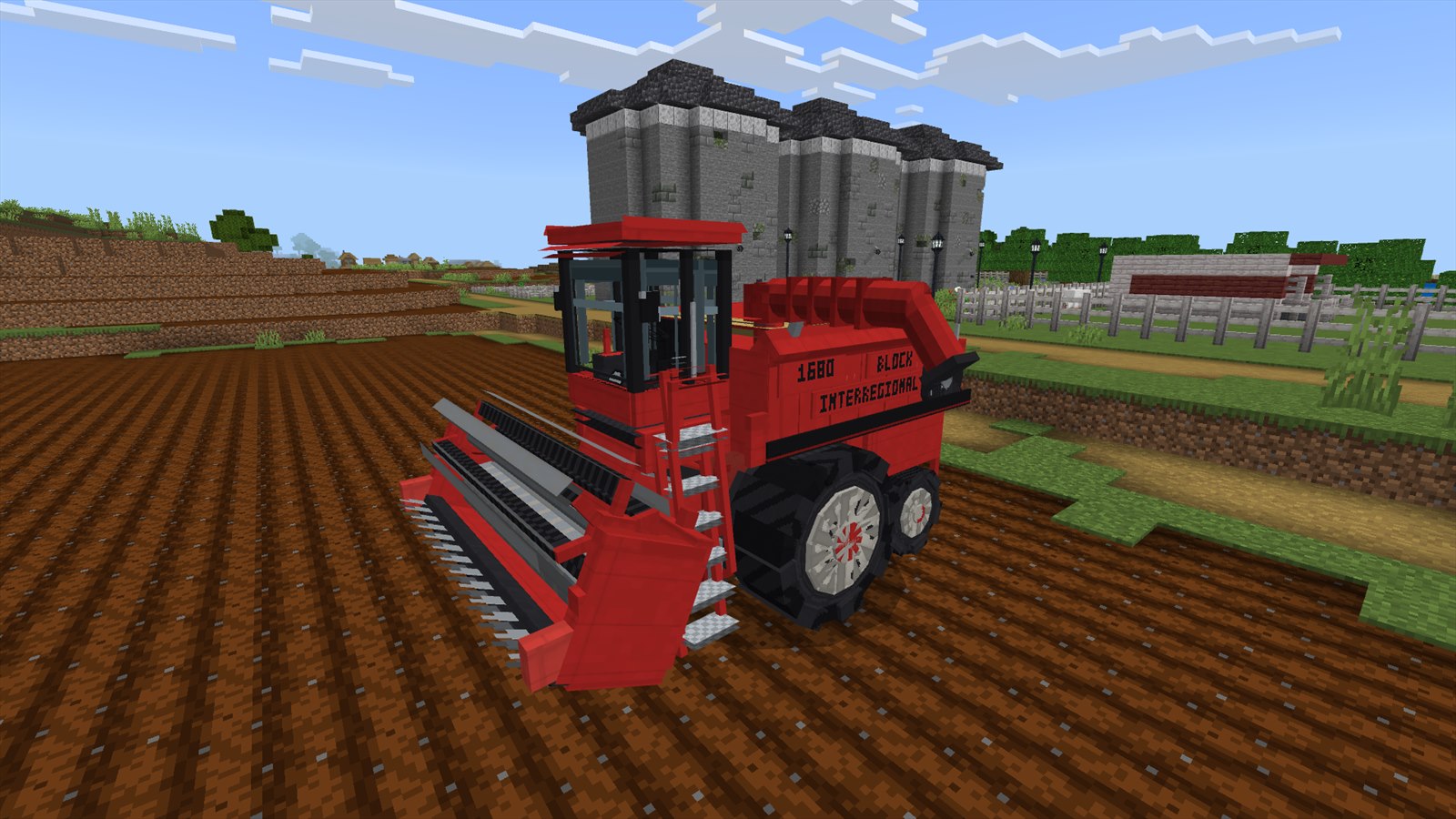
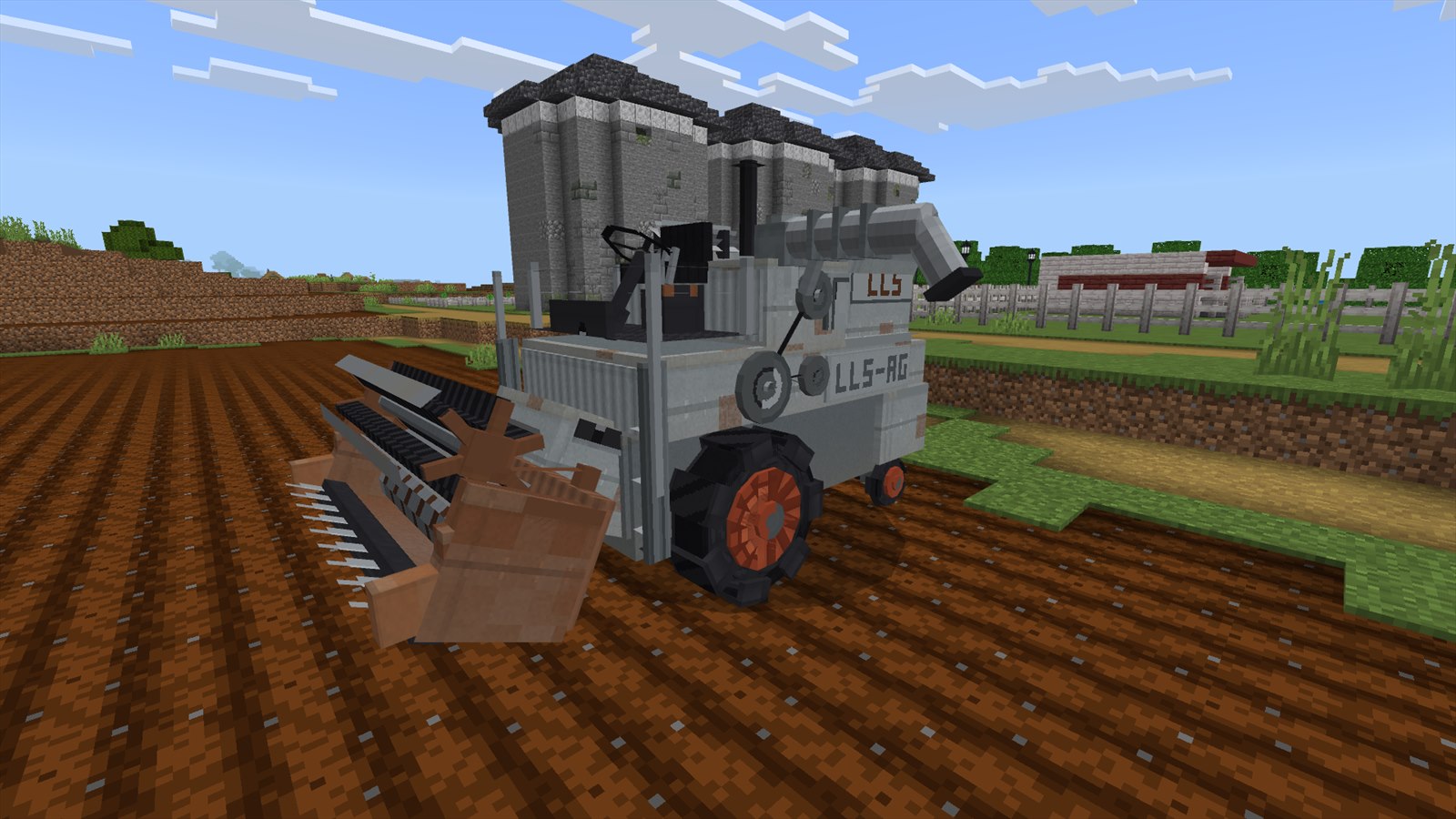
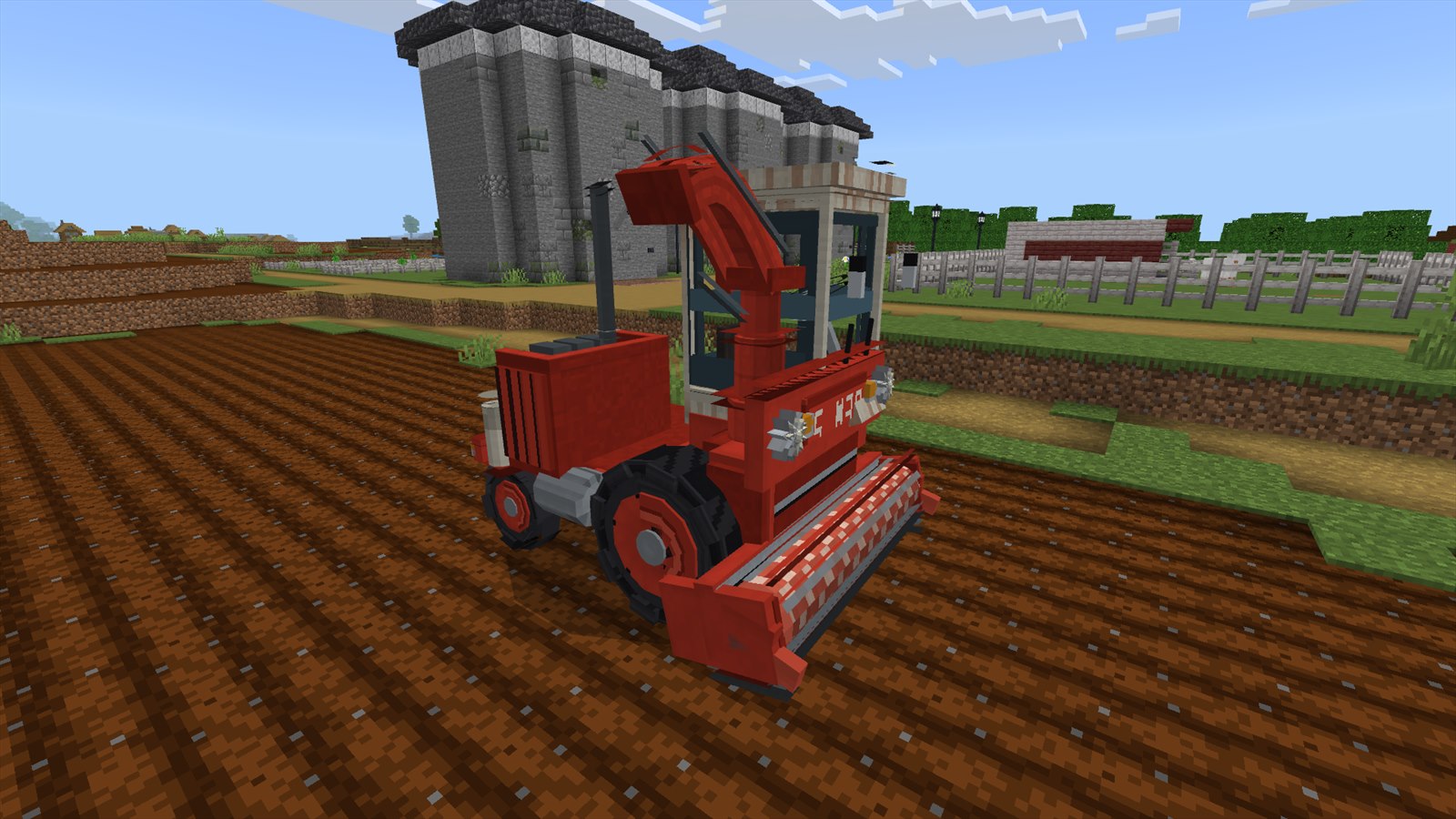
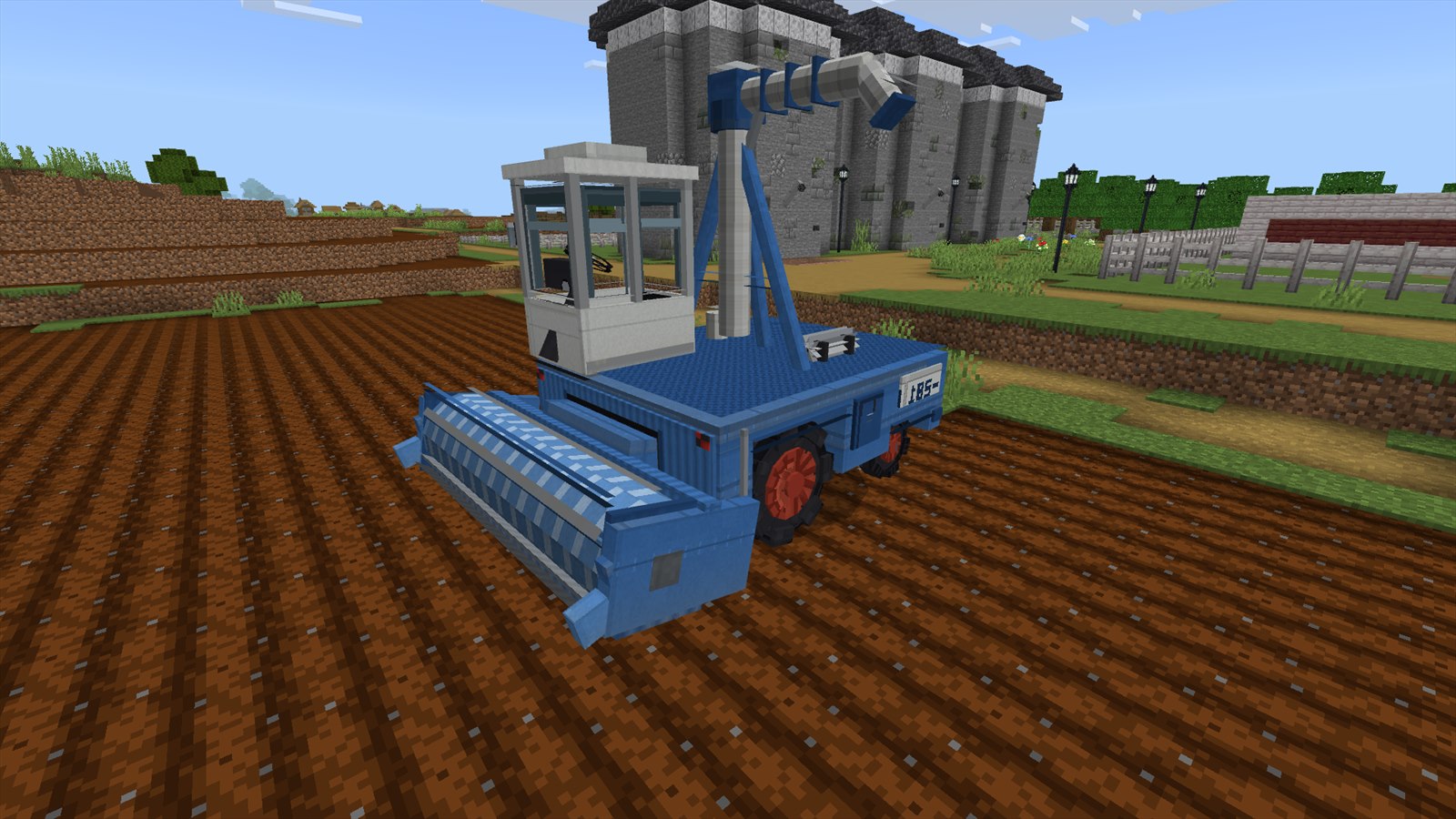
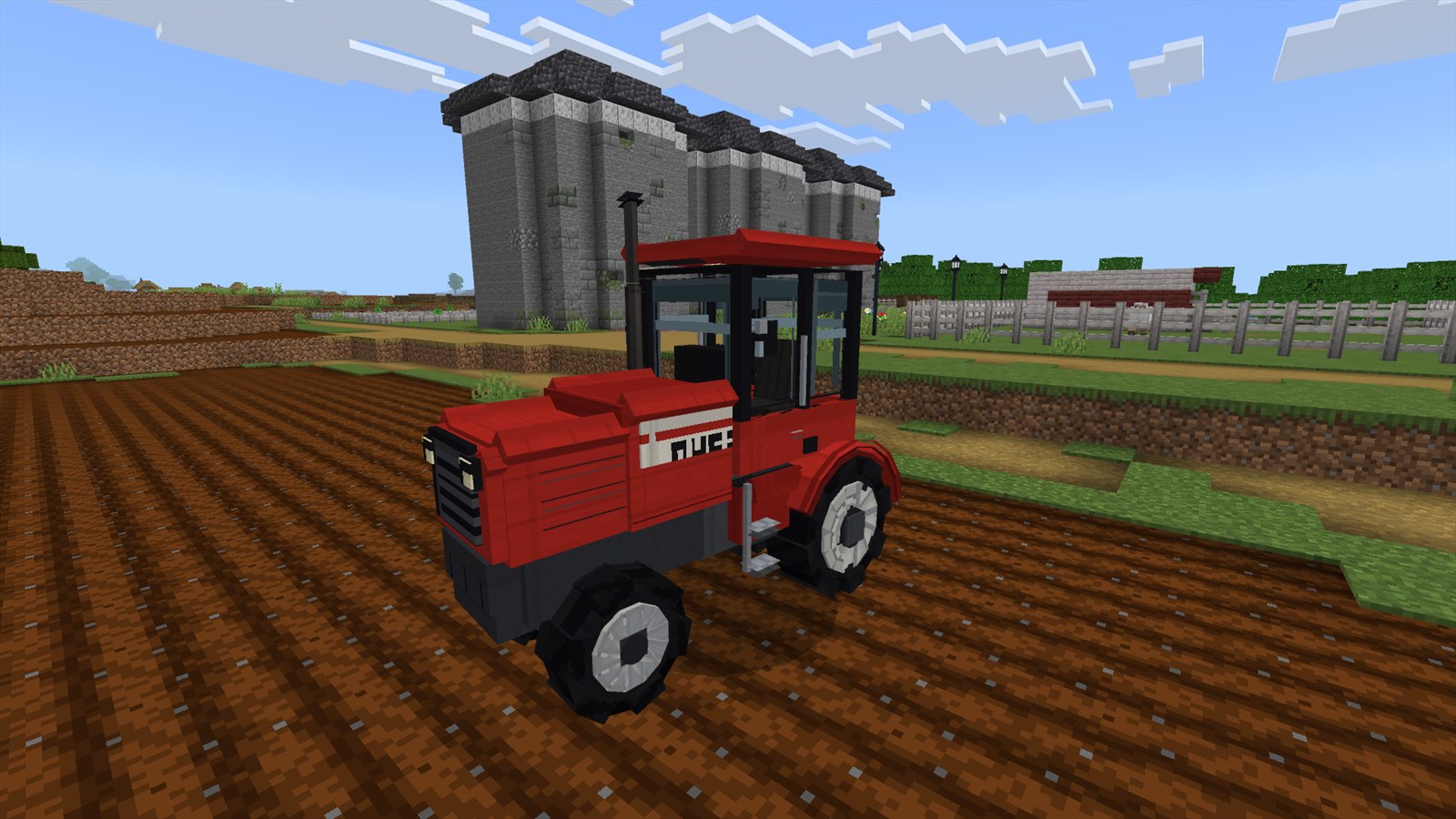
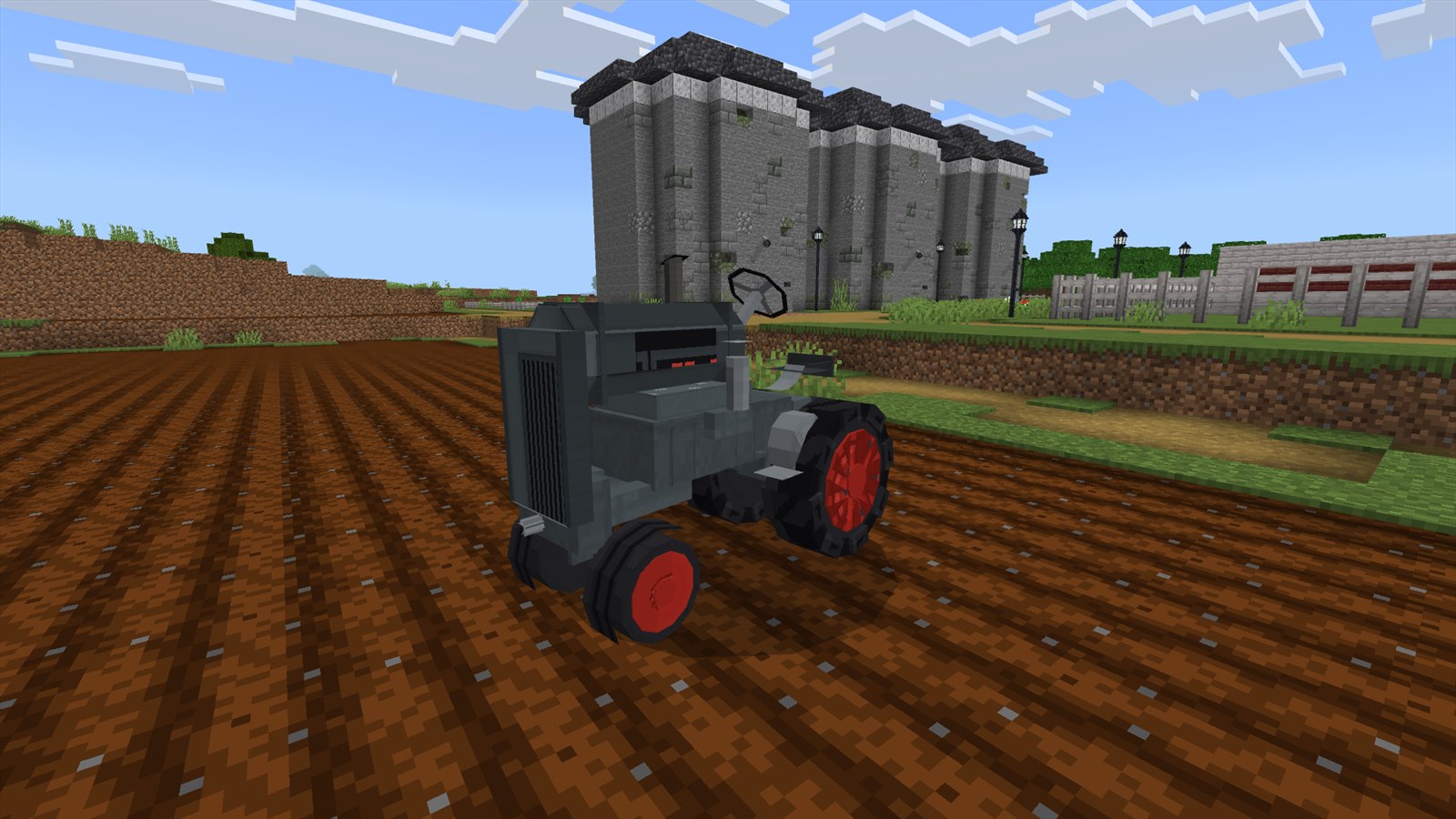
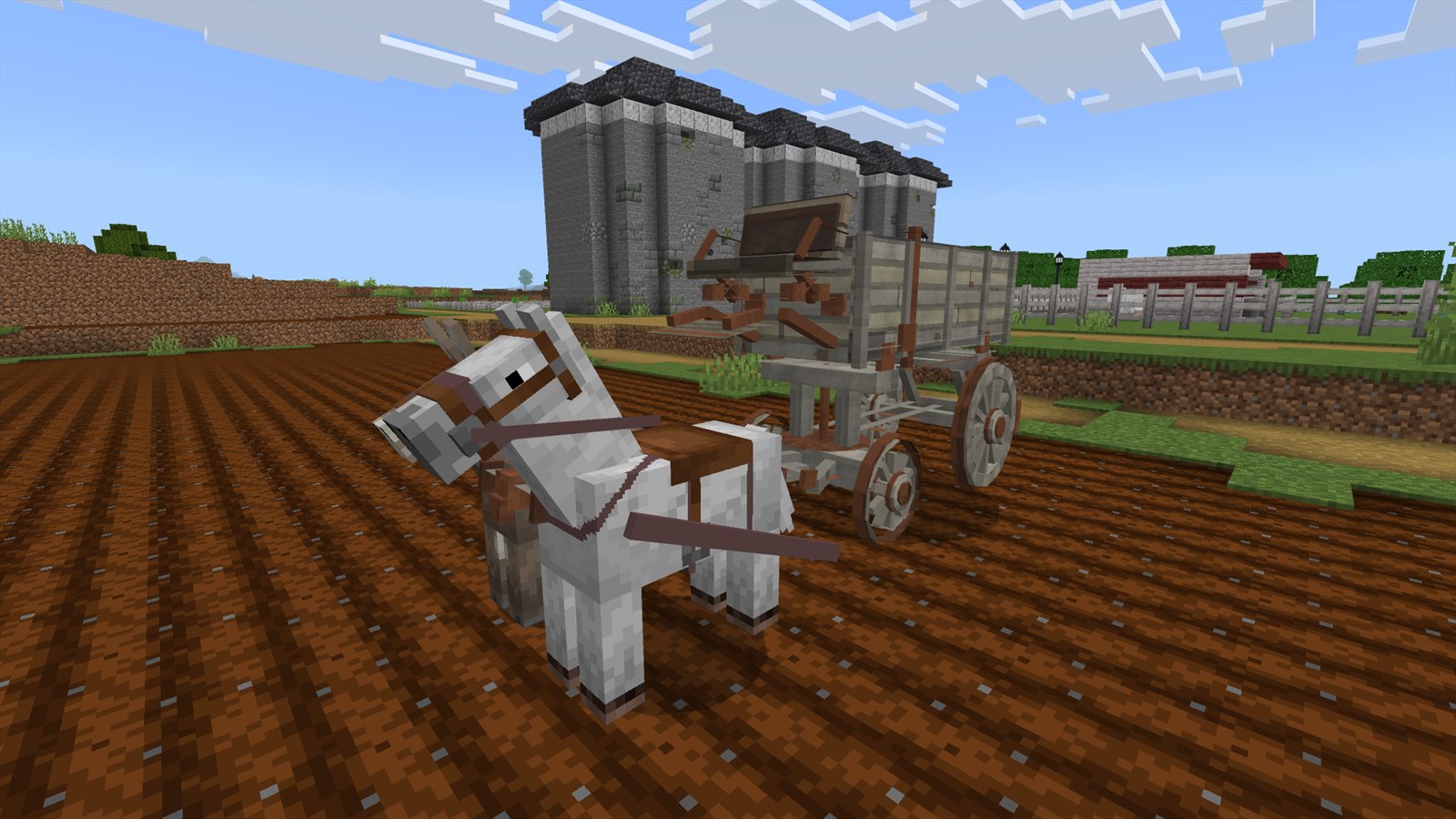
 Farm VehiclesCombines, forage harvesters, two tractors and wagons you sit in and drive.
What it is
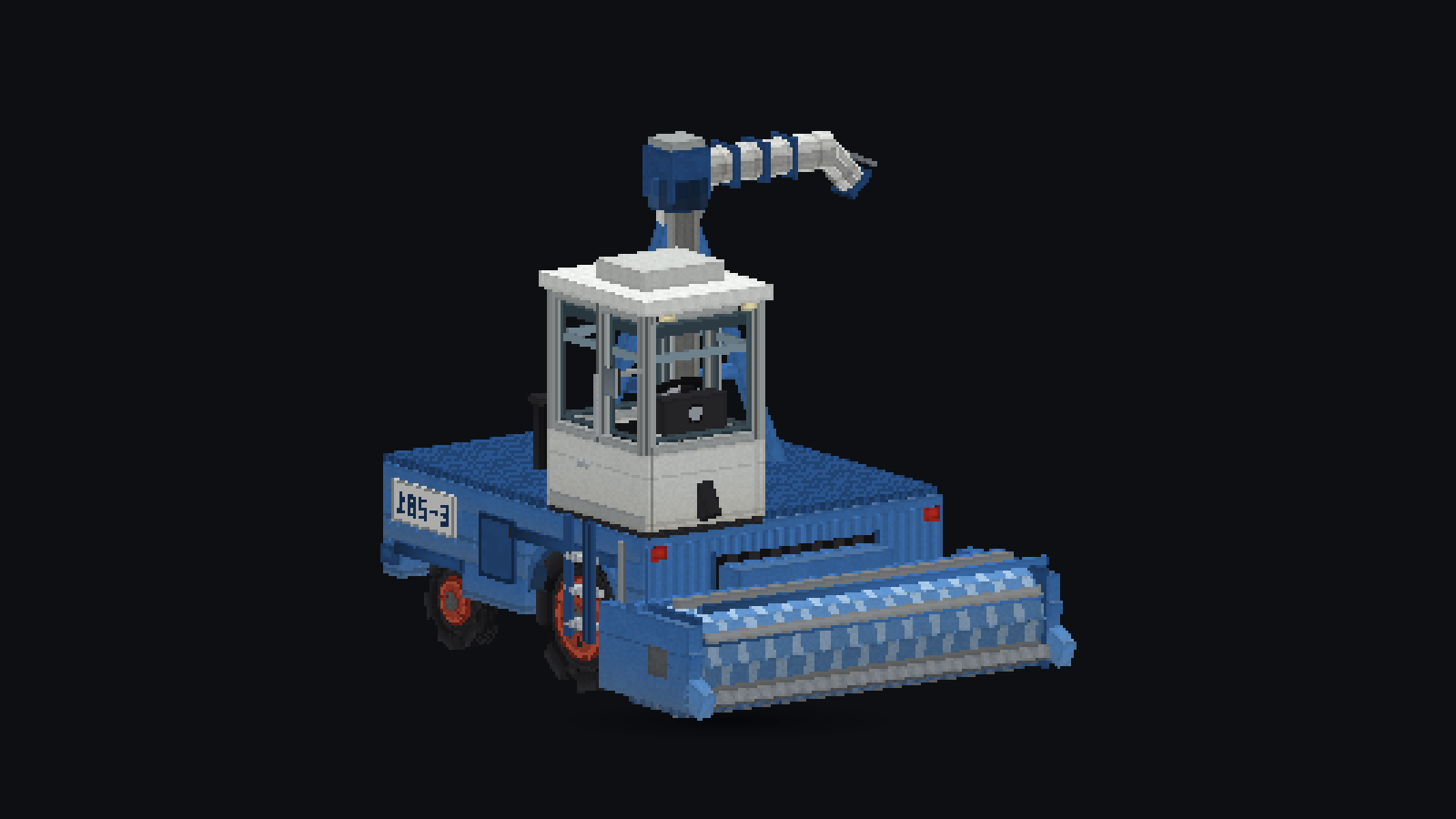
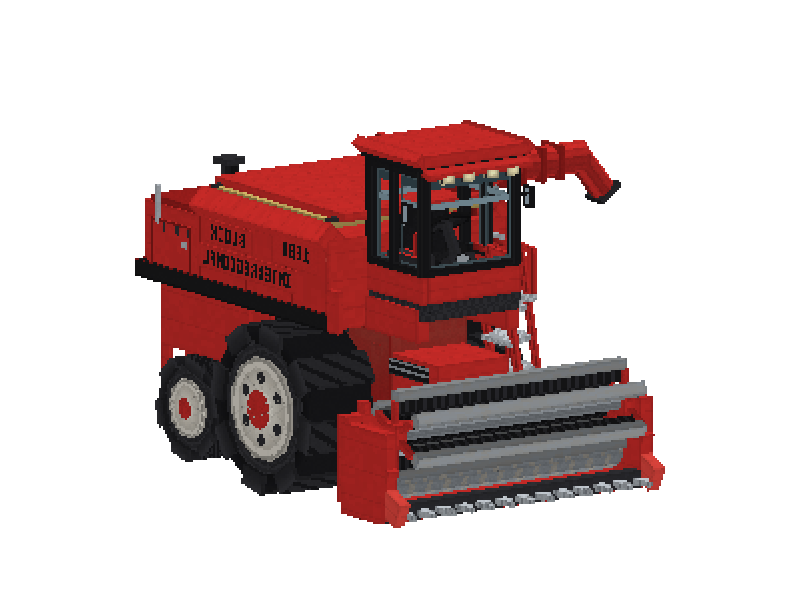
A field big enough to be worth farming is a field too big to harvest by hand. Farm Vehicles is the machinery for it: combines, forage harvesters, two tractors and wagons you actually sit in and drive.
You get in, the engine turns over, you drop the header and roll down the rows. Ripe crops go into the tank as you pass, the pipe drips the load into a cart running alongside, and the cart empties into a silo you built yourself.
The machines
Big equipment is priced in Emerald Crates, not loose emeralds — 9 emerald blocks packs into one crate at a crafting table (and unpacks just as easily), because a 64-emerald-per-slot trade can’t otherwise afford a machine this size.
| Machine | Price | Header | Tank |
|---|---|---|---|
| Combine Harvester | 18 Crates + 8 Cheese | 5 wide | 27 slots |
| Large Combine Harvester | 64 Crates + 8 Bao Buns | 7 wide | 36 slots |
| Forage Harvester | 64 Crates + 8 Bao Buns | 5 wide, standing grass | 27 slots |
| Small Forage Harvester | 18 Crates + 8 Cheese | 5 wide, standing grass | 27 slots |
| F-20 Vintage Tractor | 36 Emerald Blocks | — tows everything | — |
| 5240 Row-Crop Tractor | 36 Crates | — tows everything | — |
| Barge Box Wagon | 18 Emerald Blocks | — | 27 slots |
| Gravity Grain Wagon | 28 Emerald Blocks | — | 27 slots |
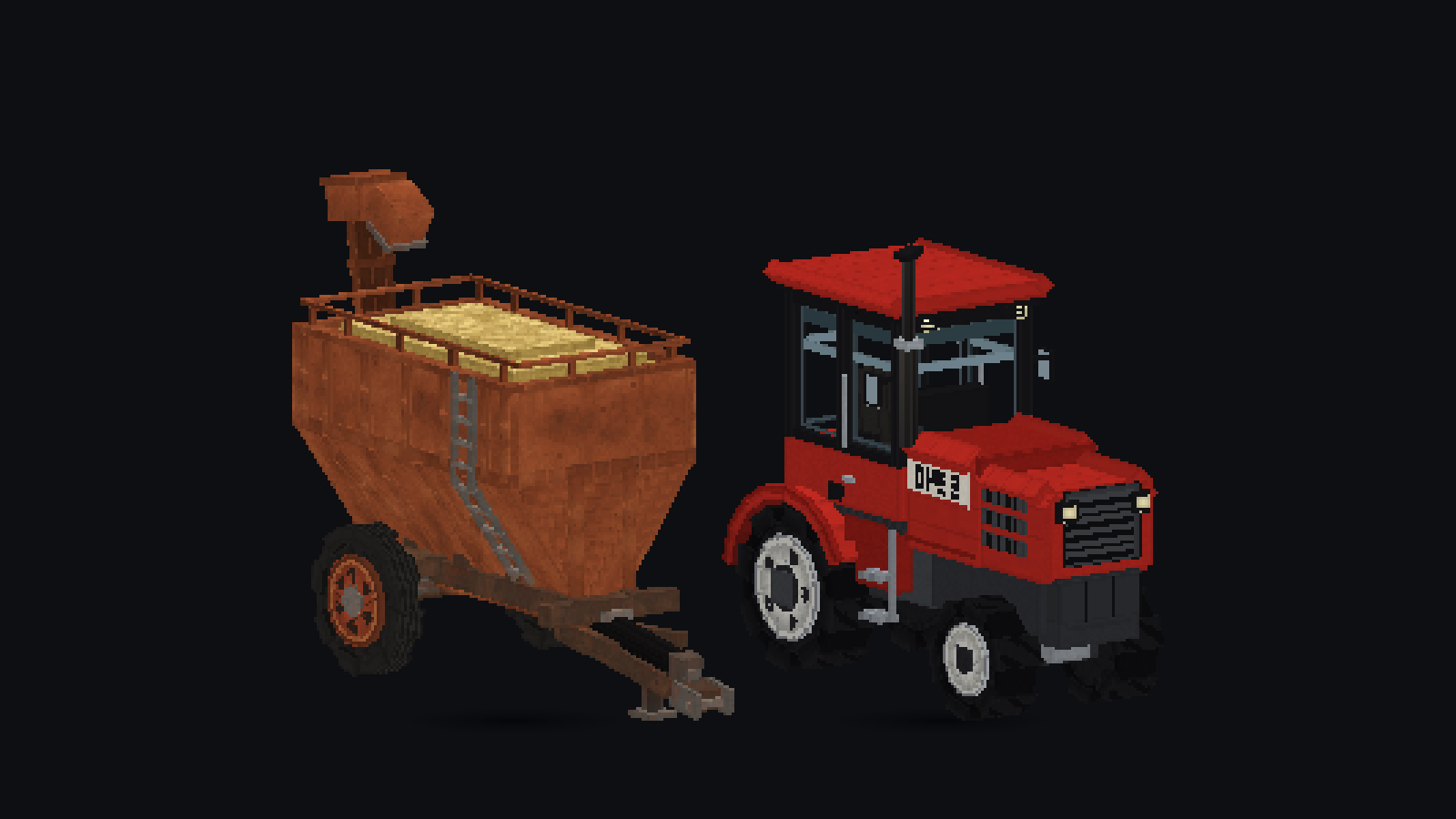
Two tractors, and the difference is money rather than capability: the F-20 is the vintage one you can afford early, the 5240 is the modern row-crop machine priced in crates. Both tow everything.
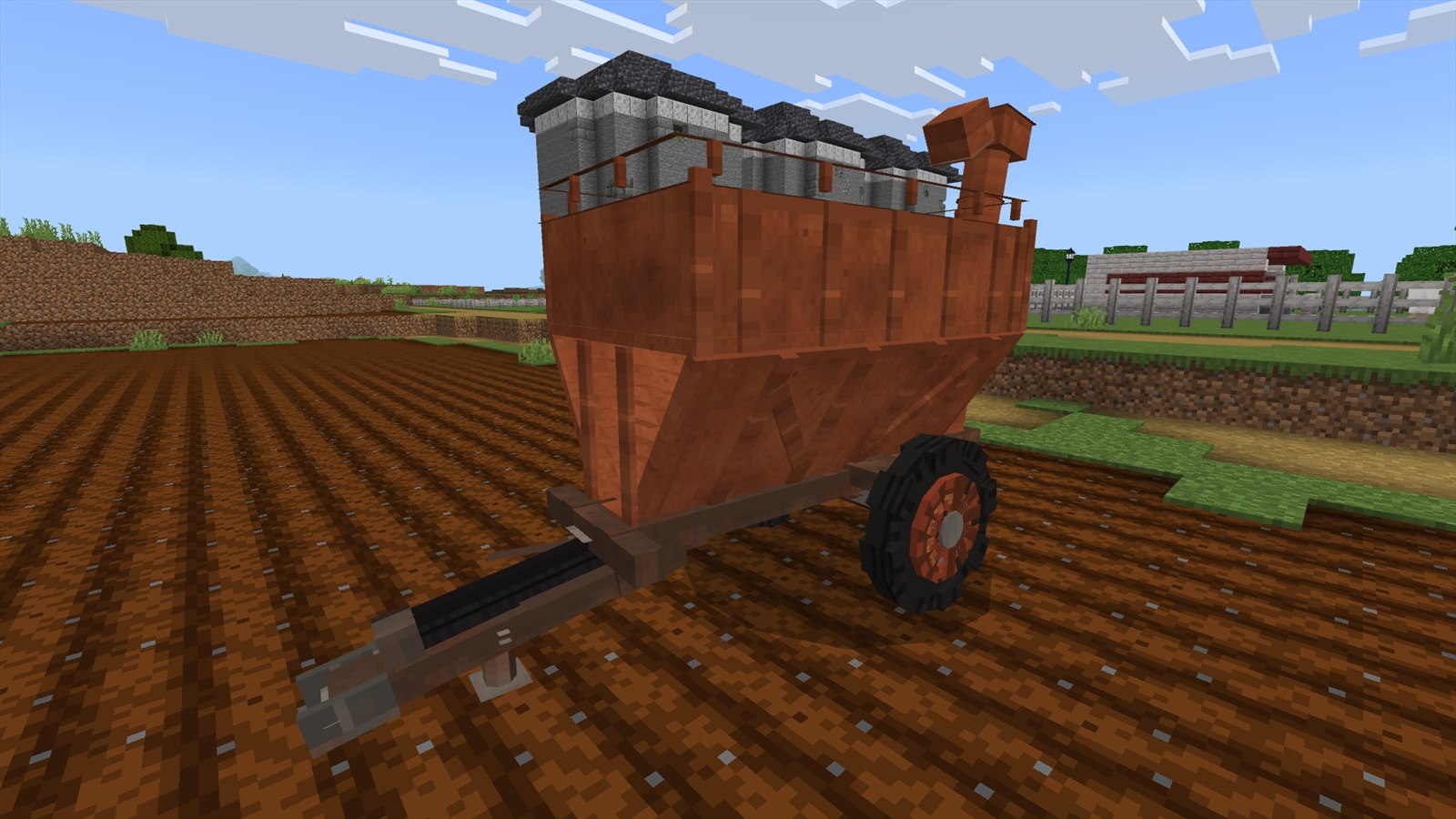
Two wagons, likewise. The Barge Box Wagon is the flat-sided grain box that used to be called the Grain Cart — same wagon, proper name. The Gravity Grain Wagon is the taller hopper-bodied one.
The Cheese and Bao Buns aren’t priced to matter beside the crates — they’re a gate, not a cost. A harvester is meant to be something a working farm buys, not just an emerald pile: cheese needs cows and milk to spare, a bao bun needs a pig herd and a veg plot going.
Cheese: a milk bucket + wheat, shapeless. Returns the empty bucket. Bao Bun: a cooked porkchop + bread + one root vegetable (beetroot, carrot or potato), shapeless, makes 2. Both are Farm Options recipes, craftable at a crafting table like anything else.
The combines take fully grown wheat, carrots, potatoes and beetroot — one plant per column, nothing half-ripe. The forage harvesters take standing grass instead: short grass is one bite, tall grass two, both halves cleared so nothing is left floating.
The small forage harvester is slower than the full-size one and discharges to the right rather than the left, so park the wagon on the other side. That’s the whole difference, and it’s a third of the price.
Driving
Interact to climb in. The engine turns over about half a second later — you hear it start, idle and shut down — and nothing moves while it’s off: no accidental rolling, no silent machines.
Movement runs off your own input: it steps up single blocks, snaps to the ground, and refuses to drive into a wall. Crops aren’t solid, so the combine rolls straight over the field it’s cutting.
| Control | What it does |
|---|---|
| Interact | Get in. Engine starts |
| Sneak (your dismount key) | Get out, engine off — set down beside the cab, not flung into a pond |
| Vehicle Key, from the seat | Harvesters: drop / raise the header. Tractor: work-speed crawl on and off |
| Wrench, at the junction | Hitch or unhitch a cart or implement — clank for connected, thud for released |
| Wrench, from the seat | Flip the hitched plow between breaking new ground and reworking old fields |
| Space / Jump | Same plow flip, without swapping to the wrench — works from the tractor seat and from a harnessed animal’s saddle |
| Sneak + empty hand, from outside | Pack the machine back into its item |
Two items act as buttons the game can’t otherwise give a machine: the key, and — down at the silo — the Unload Button. Bedrock scripts can only read movement, sneak and jump, so the mod never pretends to have a dashboard it can’t actually wire up.
Water
Drive into water more than a block deep and the machine puts you off the seat and cuts the engine, the same way a mount that can’t swim does — you drop in and swim out. A one-block ford is driven straight down into and across, not perched on top of.
The pipe and the cart
The unload pipe is automatic. Any cart under the spout head is fed one item at a time — hopper pace, doubled — engine running or not, so you can park a loaded harvester over a cart and walk away.
The forage harvesters go further: their spouts swing on their risers to track the nearest cart within five blocks and fold back to rest when it leaves. Neither arm will cross the arc over its own cab, which means a cart towed directly behind gets filled on the move.
A cart hauls one product at a time. The first item aboard sets the load, and a crop travels only with its own seed — wheat with wheat seeds, grass with grass seed. Anything else slipped in by hand goes over the side. The heap in the bed is real: empty, shallow, half, brim, heaped over the rim, and it renders green for grass and gold for grain.
Silos are something you build
There is no silo block. A 3×4 bed of waxed exposed copper grates over smooth quartz, flush with the ground, is the intake — the tower above it is whatever you feel like building.
The Silo Intake item lays the whole bed in one click. Building it by hand works exactly the same, because the structure is the thing the mod looks for.
Parking a loaded cart on the grates does nothing by itself. You need the Unload Button — an item from the Attachments Dealer, held and interacted from the driver’s seat. It lights up red and the cart empties into the silo, one slot every half second; press it again to stop.
To get grain back out, build the other half yourself: craft any vanilla button — wood, stone, whatever you have — and place it anywhere within a couple of blocks of the bed, up to six above it. That’s what unlocks the auger: press it and the silo pours a stack every half second into a trailer parked under the spout, until the trailer’s full, the silo runs dry, or you press the button again. No trailer waiting under it for ten seconds and it gives up on its own.
The mod places no button of its own for this half — one hung in mid-air with nothing built around it has nothing to cling to and pops straight back off, which is the whole reason it has to be yours.
Interacting by hand still works too:
- Interact holding grain — the whole stack goes in
- Interact empty-handed — reads out what’s stored, on your action bar
Only farm produce is accepted, and a silo holds one good at a time. Breaking any part of the bed lifts the entire thing back into a placeable Silo Intake and drops whatever was stored with it — building the bed is never a one-way trip.
Tackle: the plow, the seeder and the potato digger
The Plow (32 emeralds), Seeder (32 emeralds) and Potato Digger (32 emeralds) hitch onto the tractor’s rear mount and ride its work switch: crawl mode drops them, road speed lifts them clear.
The plow turns a two-bottom strip behind a tractor, and it has two modes. Breaking new ground converts dirt, grass, podzol and paths into farmland. Reworking old fields only touches columns that are already farmland, so the lawn beside your field survives the pass. Both clear whatever’s growing in the strip, and both leave the soil watered — which is what keeps “no irrigation, ever” true through a summer that never rains.
The seeder plants the same strip the plow tills, so a field turned in one pass seeds in one pass. Its hopper takes seeds only, one crop per load. It refuses two things out loud on your action bar rather than silently rolling over good ground:
- A dry plot — spent by the last harvest, plow it again before it takes seed
- Out-of-season seed — checked against the Seasons calendar
A refused column costs nothing. The seed never leaves the hopper.
The potato digger is the third implement, and it works the way the real machine does: the discs run in under the row, lift it, and throw the crop out onto the surface behind the machine. No tank, no hopper, no unloading pipe — it leaves the potatoes lying in the field for you to come back along and gather. Only fully grown potatoes come up; anything short of that is left standing.
Horses can pull the same tackle
A horse, donkey or mule wearing the Work Harness mounts the plow, the seeder and the potato digger exactly the way the tractor does. A harnessed animal is pinned to where you left it and won’t wander off or drift while it waits — no chasing one down before a plowing session.
To hitch a lone animal: stand near the plow or seeder with the wrench and click. That’s a single hitch, one furrow.
To hitch a two-abreast team: stand a second harnessed animal close beside the first before you click. One wrench click hitches both — the machine centres itself between the pair, you ride between and behind them, and the plow cuts two furrows at once (the seeder drills three rows). No second click, no separate command for the mate. (The digger is the exception: it lifts one row whatever’s pulling it, so a pair there buys the look of a proper team and nothing measurable — and the wrench says so rather than promising a row that won’t appear.)
From the saddle, jump does what Space does from a tractor seat: flips the plow between breaking new ground and reworking old fields. The Key isn’t used on an animal team at all — that’s a tractor-seat-only tool for raising and lowering a harvester’s header.
An animal under load drops to a plodding work pace. It’s the early-game version of the same job: slower, cheaper, and available long before you can afford a tractor.
The dealers come to you — but only to a mailbox
No mailbox, no dealers. They will not set up on your bed or wherever you last spawned — craft a Mailbox (3 iron + 1 stick) and place it facing the road, and two travelling salesmen — the Vehicle Dealer and the Attachments Dealer — set up out front every Monday, Wednesday and Friday, 8am to 8pm. The animal trader takes Tuesday, Thursday and Saturday, so there’s a market most days of the week.
They deal both ways: everything they sell, they’ll buy back at roughly half. The Attachments Dealer also stocks the Wrench (6), the Vehicle Key (4), work harnesses and leads.
And they bring no trader llamas. Any llama that wanders near a dealer is quietly removed — a farm shouldn’t come with spitting livestock attached to it.
Still ahead: hireable farm hands driving the machines. That was deliberately cut from v1 — vehicle AI, with row pathing and turns and fence avoidance, is far harder than walk-break-replant, and it makes a much better update headline than a launch blocker.
 Farm OptionsAnimals with diets and a hunger clock, crops on a real timer.
What it is
Vanilla farming is a slot machine you feed wheat into. Crops grow on random ticks, animals breed on demand, and nothing you build has a schedule you could actually plan around.
Farm Options is a simulation layer, not a content pack. It doesn’t add a new world to visit — it adds small systems to the one you already have: animals with diets and a hunger clock, crops on deterministic timers, and eventually farm hands you can hire to run the place for you.
The design pillar is that depth is optional. Play it hands-on as a chore mod, or hire help and play it as a manager mod. Neither is forced.
It runs inside anchor light zones
Everything simulated — every feeding, every crop timer, every birth — happens inside a Night Lite lamp zone, because those zones keep their chunks loaded and ticking 24/7.
That’s the whole reason the pairing exists: a farm that only lives while you’re standing in it isn’t a farm, it’s a diorama. Put a Safe Anchor in the middle of your pens and fields and they keep running while you’re ten thousand blocks away.
Animals that wander outside every lamp zone freeze out of the simulation, so keep pens inside the border. The Zone Viewer shows you exactly where that is.
Animals eat, on a clock
| Animal | Daily ration (adults) |
|---|---|
| Cow | 2 bales — hay or grass, mixed freely |
| Chicken | 2 seeds — any kind |
| Sheep | 1 grass bale |
| Horse / Donkey / Mule | 1 carrot, apple or bale — all three share one trough |
| Pig | 30 roots (beetroot, potato, carrot) or 2 bales — a bale settles 15 |
Babies eat half, rounded up — 1 for most, 15 for a piglet.
The noon feeding rush
Feeding isn’t a number that quietly decrements. Every day at noon the dinner bell rings, and your animals get a real pathfinding goal: they walk to their species’ trough from up to 32 blocks away, eat their ration straight out of it — crunch, sparkle, a few seconds of lingering — and then go back to their day.
Nothing starves just for being at the far fence. Bedrock’s pathfinder gives up well before the edge of a big zone, so at closing time any animal still within 64 blocks of a trough of its species is fed where it stands. The walk is the flavour; the closing sweep is the safety net. What will leave an animal unfed is an empty trough, or being outside every anchor zone entirely.
Each species has its own half-height trough block with that animal’s face on it — 2 planks + a sample of its feed, shapeless. Click the top and a real two-slot chest UI opens, with the info line in the title bar — “Cow Trough (eats 2 bales at noon)”. Wrong items are spat back out. Break a trough and it spills.
The hunger clock
| Days unfed | What happens |
|---|---|
| 1–2 | Hungry. No damage — a week-long expedition is survivable |
| 3 (babies: 2) | Wilting begins: 1/3 max health per day, smoke particles mark the suffering |
| ~6 | Dead |
Animals never regenerate on their own — a full trough meal heals 1/3 max health, so feeding is also how you nurse anything back after a scrape. Babies run a hotter clock than adults, which is what gives you a reason to check the pens daily even once the adults are self-sufficient.
A farm you prepared before leaving survives. A farm you abandoned collapses.
Mating is yearly, not on demand
Hand-breeding is gone — breedable is stripped from every animal, which
kills the wheat-spam exploit outright.
Instead each tamed animal runs its own breeding cycle, and the length depends on the species — a chicken comes back round in a week, a cow takes a month. Each day inside the window rolls a chance to pair with an adult of its species within 16 blocks, and the last day is a sure thing if a partner’s around.
| Animal | Breeding cycle | Babies per litter | Baby grows up in |
|---|---|---|---|
| Chicken | 7 days | 10 | 7 days |
| Sheep | 14 days | 2 | 14 days |
| Pig | 14 days | 8 | 14 days |
| Cow | 28 days | 1 | 28 days |
| Horse / Donkey | 28 days | 1 | 28 days |
Mules don’t breed at all — same as vanilla. A horse and a donkey together still make one, which is the only way to get a mule now that hand-breeding is gone.
Only animals at perfect health mate, so the herd grows only as fast as you’re actually feeding it.
Horse stamina
Every tamed adult horse, donkey and mule carries a 0–100 stamina bar, shown live on the action bar while you ride. It drains from full to empty over two in-game days.
| Fed on the road | Stamina back |
|---|---|
| Carrot or apple | +40 |
| Hay bale or grass bale | full bar |
A bale is a working animal’s real feed rather than a treat, so it settles the whole thing — the same as a day’s trough ration. Carrying one is its own cost: a bale is a block-sized item you had to grow.
At zero the animal is exhausted and loses 1 health every 30 seconds until it’s fed. Exhaustion replaces the wilt clock for adult equines. Wild ones are exempt — this is about animals you’ve taken responsibility for.
Crops on a real calendar
Crops are tracked from the moment they’re planted and grow one stage per whole day on the midnight tick. Random ticks don’t get a vote, so everything planted the same day matures in lockstep and a field becomes a schedule rather than a guess.
| Crop | Grow time | Plant in | Survives through |
|---|---|---|---|
| Wheat | 5 days | Spring | Summer |
| Carrots | 3 days | Spring | Summer |
| Potatoes | 3 days | Spring | Summer |
| Beetroot | 6 days | Autumn | Winter |
| Grass (seed) | tall at 3 days | Any but winter | Never wilts |
Plant out of season and the seed is handed straight back — you lose nothing but the walk. Harvest early and you get vanilla’s single seed rather than a crop, so there’s no reason to rush a row. Leave one in the ground past its last season and it wilts away — that one really does cost you the harvest. Farming becomes something you plan, with plots staggered into rotations timed to what each species eats.
Waterless farmland
Hoe the ground and it reads watered instantly, forever. No irrigation, no water channels cut through your field. It stays wet through planting and full maturity; harvesting dries the plot out but the field never reverts to dirt — hoe it again to re-wet it and plant the next round.
True water crops like sugar cane and kelp still follow vanilla rules.
Feed you can actually farm
- Grass Seed — vanilla has no such item, so here’s one. Plant it on grass or dirt; one full day later it’s tall grass. Shear that for 2 grass. It also counts as chicken feed.
- Grass Bale — 9 short grass or 5 tall grass. This is what lets cows and sheep live in a small pen instead of needing acres of pasture.
- Wheat seed drops are flat — mature wheat gives 2–3 seeds instead of vanilla’s random 0–3, so the chicken feed supply is plannable rather than luck.
Apple trees, on the same calendar
An apple sapling (an apple + an oak sapling) grows in four days into an oak-shaped tree wearing apple leaves — and every tree in the world ripens together, because the fruit stage is read straight off the season rather than from a per-tree timer.
| When | The canopy |
|---|---|
| Spring | tiny green apples, then small green |
| Summer 1–5 | full-size green — still not pickable |
| Summer 6+ | red: the harvest |
| Autumn | brown — the crop spoils, and half the tree drizzles spoiled apples down over the season |
| Winter | bare, and the cycle resets |
Harvesting is by hand: shake the tree. Interact with a leaf or the trunk and every ripe leaf on that tree lets go at once, the fruit falling out of the canopy where it grew. Nothing but the autumn drizzle ever falls on its own. Brown leaves drop Spoiled Apples — a poisonous-potato of an apple, small meal and a 60% gamble, whose honest use is the composter. A picked leaf stays bare until winter clears it.
Hand tools: the sickle and the scythe
Two reaping tools for the fields a machine isn’t worth. Both cut fully grown crops and grass around you, open behind, and both dry the plot they cut — re-hoe to replant.
| Tool | Swath | Swing |
|---|---|---|
| Sickle | 3 cells — the row just ahead | quick snip |
| Scythe | 9 cells — five wide, two rows deep | slow two-handed sweep |
The scythe is the upgrade, and it earns that by taking more per swing rather than by swinging faster: half the cadence, three times the bite. A swing costs one point of durability whatever it cuts, so the wide tool is also three times the field per point of wear. Both deliberately sit under the draught machines.
The Crop Calendar
Every seasonal rule on this page used to be discoverable only by planting a seed and reading the refund message. The Crop Calendar is the mod telling you up front — an almanac board you hang on a wall, and it works on two levels:
- On the wall, a 2×3 painted chart: crop rows down the left, the four seasons across the top, and a bar per crop — green where it goes in the ground, gold where it comes out. The season you’re in is the lit column, so a glance across the barn tells you what to sow and what to bring in.
- On click, a form with the actual numbers per crop, the real item art beside each name, and a live can I sow this today answer.
It needs a clear 2×3 of wall to hang — the placement is refused and refunded otherwise. Put one block up and it lays the other five; break any one and the whole painting comes down as the single item you put up. Every number on it is read from the systems that own them, so it can’t drift out of date.
Slaughtering your own stock
Vanilla pays 1–3 chops for a cow, which is why nobody in vanilla raises one for meat. Here a grown animal is a season of feed and a breeding cycle, so killing one settles that bill in a single cut:
| Animal | Slaughtered by hand |
|---|---|
| Cow | a full stack of raw beef |
| Pig | half a stack of raw porkchop |
| Sheep | half a stack of raw mutton |
Three gates, all deliberate. The animal has to be yours — it ate your feed at some point; a wild cow shot in the woods is still a vanilla cow. It has to be grown, because a calf is a cow you haven’t finished paying for. And the killing blow has to be yours: stock lost to a wolf, a fall or a creeper is a loss, not a windfall. Vanilla’s own drops — the leather, the wool, its handful of chops — still fall beside the payout.
The farm report
When each noon window closes, a chat summary posts: fed, hungry, wilting, died. Births announce themselves with a pink ♥ line as they happen.
It’s the one piece of UI the mod insists on, because a simulation running while you’re away is only worth having if it can tell you what happened.
Still to come: sickness and medicine, and hireable farm hands — a Crop Specialist that harvests and replants, and a Livestock Specialist that feeds on schedule, both tied to a lamp so they never wander off.
 SeasonsA four-season calendar the sky and the ground both follow.
What it is
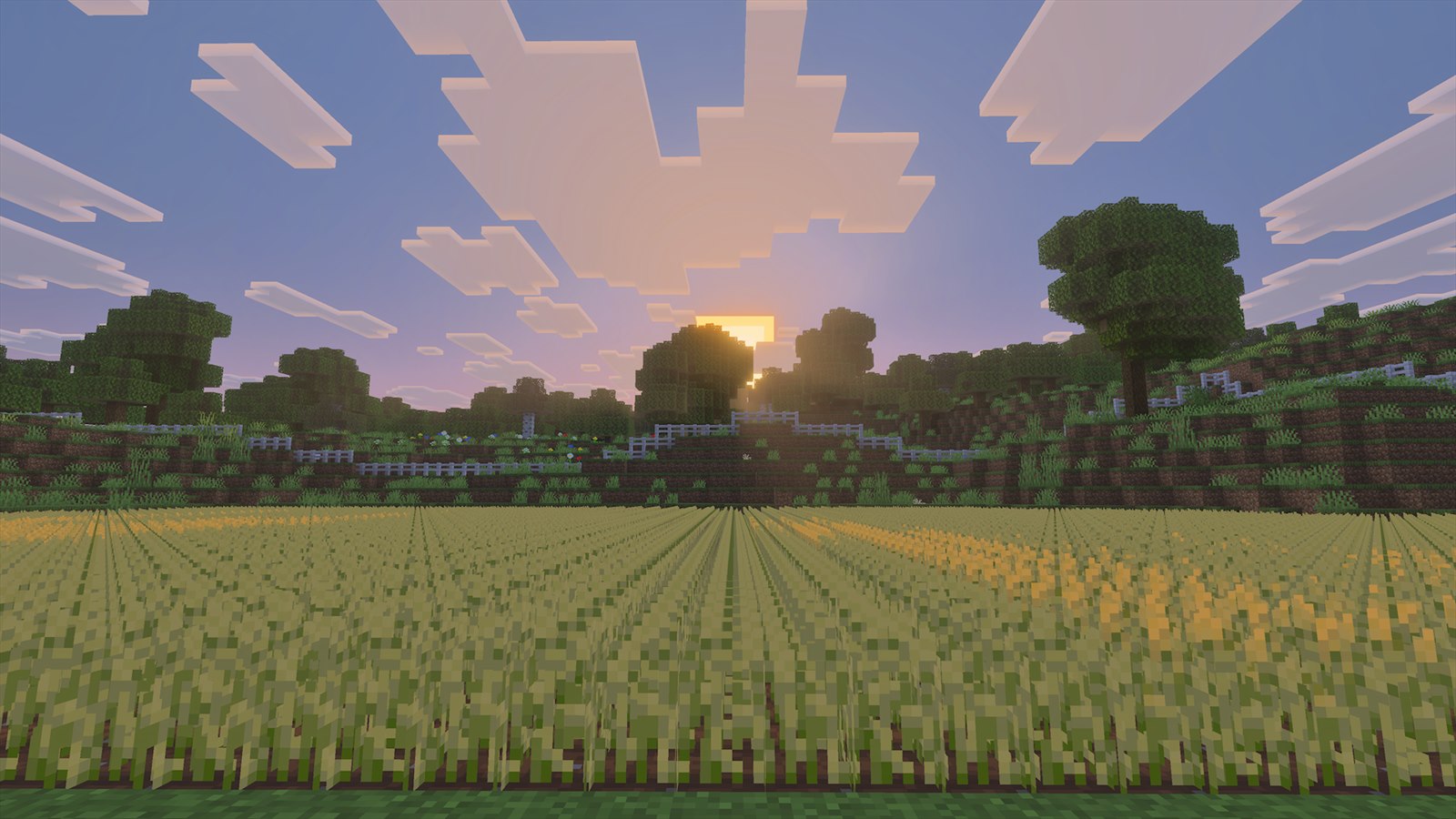
Vanilla Minecraft has weather, but it doesn’t have a year. Rain arrives on a dice roll, snow depends entirely on which biome you happen to be standing in, and nothing about the world tells you what time of year it is.
Seasons adds the missing calendar — and then makes the sky, the ground, and the rest of the pack all follow it.
The calendar
The year is 28 days: four seasons of seven days each. The week runs Monday to Sunday and lines up exactly with the season, so every season begins on a Monday and the weekday tells you how far into the season you are.
The calendar is worked out from how many days have actually elapsed rather than being counted and stored, which means it can’t drift — sleep through as many nights as you like, reload as often as you like, the date is still the date.
Days roll over at midnight, not at dawn like vanilla’s day counter. A new day starting at 12am rather than 6am simply matches what a day is.
/time setwill not move the seasons — use/scriptevent llss:dayinstead.This catches everyone, so it’s worth stating plainly. The calendar is measured from Minecraft’s gametime — the total ticks your world has existed, which only ever counts upward.
/time setmoves daytime, the sun’s position in the sky, and leaves gametime completely untouched.So
/time setjumps the sky and advances the calendar by zero days. If you’re testing and it looks like time has stopped, that’s why — and if winter arrived while you were doing it, spring will never come and your snow will never melt, because as far as the mod is concerned it’s still winter.
Command What it does /scriptevent llss:dayAdvance one day — fires a real midnight, crops grow, snow deepens or thaws /scriptevent llss:setseason springJump straight to a season /scriptevent llss:weatherRead out the current day, season and sky /scriptevent llss:snow thawForce a thaw pass right now Stuck under permanent snow?
/scriptevent llss:setseason spring, then/scriptevent llss:daya few times. The thaw takes a few spring days to lift deep snow rather than clearing it in one go.
The clock
A constant readout sits near the vanilla Days Played line:
06:30 ☀ Spring · Mon
24-hour time, the current season with its own icon, and the day of the week. It steps aside when you’re riding a horse, so the stamina bar can have that line.
Weather that follows the year
The sky stops rolling dice and starts following the calendar. Each day rolls against its season:
| Season | What the sky does |
|---|---|
| Spring | 20% rain, otherwise clear |
| Summer | Clear, every single day |
| Autumn | 25% thunderstorm, else 60% rain — plus a 40% chance of fog on top |
| Winter | 40% snowfall, 20% fog — and the first day of winter always snows |
Fog rolls separately from rain, so an autumn day can be foggy and storming.
Each day’s roll is remembered, so reloading doesn’t reshuffle the weather, and anything that tries to override it — vanilla’s own weather cycle, sleeping through a storm — gets corrected straight away.
Snow, the hard way
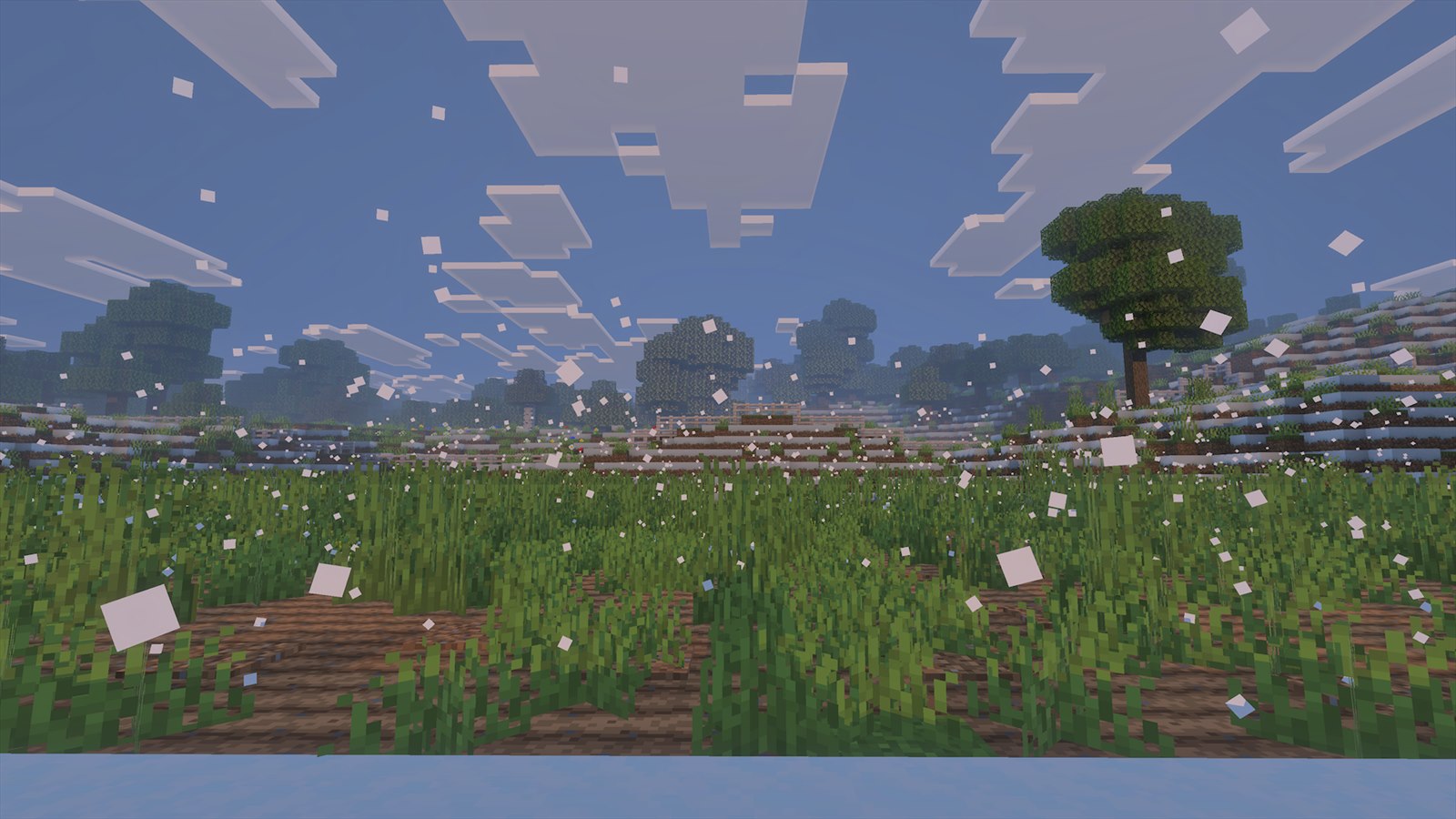
Bedrock has no snow weather type. Weather is only ever Clear, Rain, or Thunder, and whether falling precipitation looks like snow is decided by biome temperature — something no script can change. Riding vanilla Rain for a snowy day meant plains farms got literal raindrops falling through the snow.
So a snowy day here is three effects stacked:
- Clear weather, plus a custom overcast fog standing in for the sky-darkening that rain would normally provide
- A snowfall particle effect around every outdoor player, so it looks snowed on rather than rained on
- A real snow carpet laid on the ground when winter arrives, deepened each snowy day, and thawed naturally over the first few days of spring rather than vanishing overnight — deep snow takes a few spring days to lift
Worlds that ran Farm Options before Seasons existed keep their existing calendar position rather than being snapped back to spring.
 Night LiteLights that spawn-proof an area, and anchors that keep it running while you are gone.
What it is
Lighting a base in Minecraft is a chore dressed up as decoration. You don’t place torches where they look good — you place them every seven blocks because that’s what stops things spawning behind you.
Night Lite separates the two. Its lights spawn-proof an area regardless of light level, so you can light a build the way you actually want it lit.
The Victorian Lamp
There is one ward light, and it isn’t a re-skinned vanilla block — it’s a lamp of its own.
| Block | Crafted from | Light |
|---|---|---|
| LLS Victorian Lamp | 4 iron ingots + glowstone + black dye | 15 |
| LLS Victorian Lamp (Plain) | 4 iron nuggets + glowstone + black dye | 15 |
| LLS Lamp Post | 3 iron ingots → makes 4 | none — it’s the pole |
The plain lamp is the cheap grade, nuggets instead of ingots. The Lamp Post is purely the mast — stack as many as you like under a lamp head; one lamp head is one ward, however tall you build it.
Vanilla torches, lanterns and glowstone are left completely alone. Place as many lamps as you like — they never consume a ticking-area slot.
Safe Anchors
A Safe Anchor (1 dirt) spawn-proofs like a lamp does, and also keeps its chunks loaded and ticking 24/7 in a 2-chunk radius. Crops grow, hoppers move, redstone runs, bred animals live their lives — whether or not you’re standing there. Think of it as an invisible player keeping the area awake.
A Large Safe Anchor (4 dirt) does the same at a 4-chunk radius — the engine’s maximum — covering roughly four times the ground for a single slot. Worth it for a big farm you’d otherwise have to tile with several small anchors.
Drop one in the middle of a crop field or animal pen and it becomes the farm zone everything else in this pack simulates inside.
What “protected” actually means
A lamp holds a 32-block box, 32 up and 32 down. An anchor protects its whole loaded footprint — the same radius it chunk-loads, so a small anchor guards about 32 blocks out and a large one about 64. Inside either:
- No hostile spawns. Anything that spawns inside is removed immediately.
- No wild animal spawns. Farms stay exactly the herd you built rather than filling up with strays.
Deliberate spawns still work — spawn eggs, thrown eggs, buckets, and ordinary vanilla breeding all behave normally.
The ten-slot problem
Bedrock caps a world at ten ticking areas, full stop. That’s a vanilla limit, not something Night Lite chose, and it’s the real constraint on this kind of mod.
So the anchors are careful with it:
- An anchor placed inside another’s loaded radius shares that ticking area instead of burning a slot
- Anchors past the cap still block spawns — they just don’t chunk-load
- Break an area-holder and a waiting anchor is promoted into the freed slot automatically
Lamps never touch the cap at all.
Seeing your zones
Right-click any placed lamp or anchor to toggle particle borders around every zone nearby. Green marks a lamp’s ward, red marks a Safe Anchor. The setting is per-player and remembered between sessions, and placing a new one flashes its border for 20 seconds so you can see what you just covered.
The LLS Zone Viewer (a stick, shapeless) does the same from anywhere. Sneak + use it for a readout: how many Safe Anchors you have, how many of your ten area slots are in use, and your lamp count.
A block that got removed
Version 1.2.0 removed a block called the Active Anchor — live chunks with no spawn protection, meant for AFK mob farms.
It didn’t work, and it was never going to. Bedrock rolls natural hostile spawns in a radius around each online player, not around ticking chunks generally, so a ticking area on its own never produced spawns from far away. The block couldn’t deliver what it promised, so it’s gone rather than sitting there disappointing people. Any already placed in a world is now inert.
The same limitation is why anchors are honest about their scope: they’ll run your crops, hoppers, redstone and bred animals while you’re away, but they can’t run a mob farm for you.
 Missing BlocksBarn doors, drive-through gates, fences, half-height paths — the pieces vanilla skipped.
What it is
Not a system, not a theme — a growing collection of the blocks and items vanilla never got round to making, added as builds need them and as people ask for them.
Nothing in the farm depends on it. It ships here because most of what’s in it turns out to be farm furniture, and making you find a second download for a gate you can drive a tractor through would be silly.
What you get
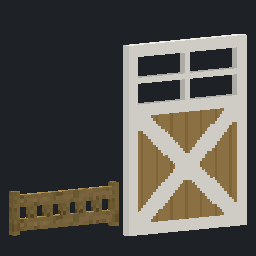
| Barn Doors | 144 — three sizes, sliding or swinging, plain or windowed, every wood. They animate through the whole arc, and a pair placed together mirrors and opens from the middle |
| Fences & Gates | 36 double-width gates in three heights, plus 24 fences in two. The gate spans a full two-block gap in one leaf, so machinery fits through |
| Path & Grass Slabs | Half-height versions of two blocks vanilla only ships as full cubes |
| Wooden Bucket | Craftable from planks on day one. Fills, pours, milks and drinks like the real thing — but won’t carry lava |
| Stool | An oak stool you can actually sit on — interact and you’re on it |
The full write-up is on the Missing Blocks page — every item, how the doors are built, and what the fences had to work around.
Where the pack is at
Farm Options, Seasons and Night Lite are finished and playable. Farm Vehicles is out and works — driving, harvesting, the pipe, towing, silos, the plow, the seeder, both dealers and the draught-animal teams — and is still being worked on.
Not on the Marketplace yet. That’s what the console notice on this page is about.